

Table of Contents
Brazil’s Central Bank Unveils Major Pix Upgrades: Hybrid QR-Boleto Payments, International Use, and Offline Transactions
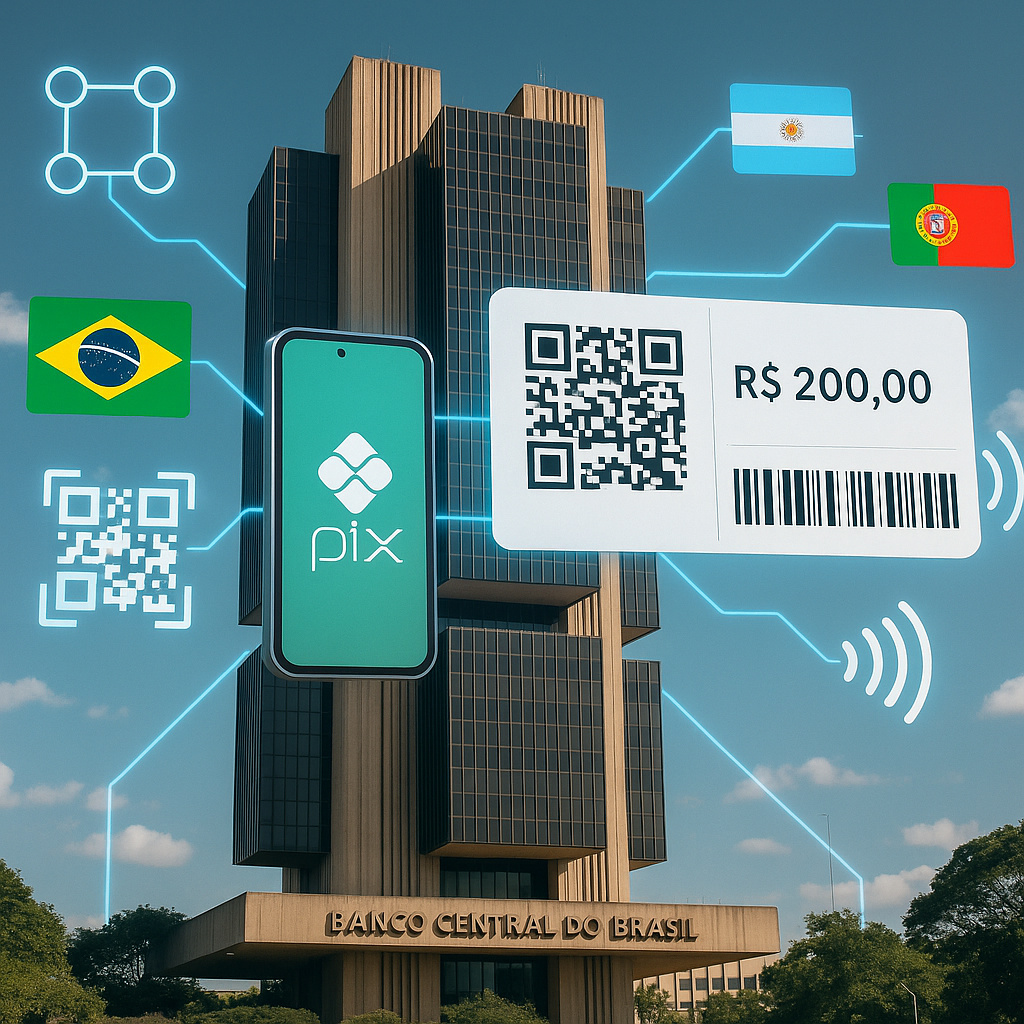
The Banco Central do Brasil (BCB) has announced a comprehensive package of new functionalities for its flagship Pix instant payment system, with hybrid QR-boleto payments becoming mandatory for Brazilian banks by November 2026, international expansion planned for 2027, and offline proximity payments enabling transactions without internet access. The upgrades aim to deepen Pix’s integration into corporate credit operations, simplify real‑time tax collection, and extend its reach beyond Brazil’s borders, solidifying the system’s role as the country’s dominant payment method while preparing it for global competition.
2026 Rollout: Hybrid Charges, Duplicate Invoices, and Real‑Time Tax Integration
The BCB’s 2026 agenda focuses on bridging Pix with business and tax systems. The hybrid charge functionality will allow a single invoice to be paid via QR Code or traditional barcode (boleto), a feature that is currently optional but will become compulsory for all banking systems starting November 2026. Duplicate invoice payments will be enabled directly through Pix, streamlining corporate credit operations and reducing administrative costs. In collaboration with the Federal Revenue Service, Pix will also be integrated into real‑time tax payments, providing immediate clearance and offsetting under the country’s tax reform guidelines.
2027 Roadmap: International Pix, Offline Proximity Payments, and Credit Collateral
For 2027, the central bank is planning innovations that will directly impact everyday users and small entrepreneurs. International Pix, currently tested in limited form in Argentina and Portugal, will be expanded and linked to payment networks in other countries, facilitating cross‑border transactions for tourists and importers. Offline proximity payments will allow users to make transfers and purchases without an internet connection by leveraging near‑field communication (NFC) technology. The Pix as Collateral feature will permit future Pix receivables to be used as official security for loans, a long‑awaited option for self‑employed workers and small businesses.
Background and Strategic Implications
Pix has become Brazil’s most widely used payment method since its launch in November 2020, processing over 200 billion reales monthly. The BCB’s latest upgrades are designed to maintain the system’s momentum while addressing gaps in business‑to‑business payments, tax compliance, and financial inclusion. The mandatory hybrid charge rule is expected to accelerate the displacement of paper‑based boletos, while the international and offline capabilities position Pix as a potential competitor to global card networks and digital wallets. A separate installment‑payments feature remains under technical discussion without a firm launch date, with the BCB aiming to standardize rules and encourage lower interest rates through increased competition among banks.
The announcement follows a period of heightened international attention on Pix, including criticism from the U.S. White House over its dominance and praise from the Lula administration for its role in financial democratization. With these upgrades, the BCB is betting that Pix can evolve from a domestic instant‑payment rail into a multipurpose financial platform that serves businesses, the government, and consumers both inside and outside Brazil.


Recent Comments