


Table of Contents
⚠️ Systemic Risk Warning
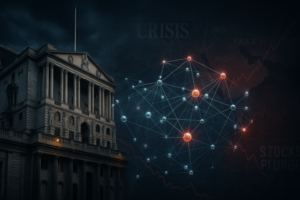
The Bank of England has issued its most severe financial stability warning since the 2008 global financial crisis, stating that the ongoing conflict in Iran poses a direct threat to global financial system stability that could trigger a crisis of similar magnitude to the 2008 collapse.
In a stark assessment delivered on April 10, 2026, the Bank of England’s leadership has warned that the Iran war represents what central bankers term a “systemic risk event” with the potential to unravel global financial markets in a manner reminiscent of the 2008 financial crisis. This dire warning comes as the Bank of England continues its quantitative tightening program, reducing its asset purchase balance from a peak of £895 billion to £529 billion, while financial markets anticipate a potential interest rate increase to 4% in June 2026.
Critical Risk Factors Identified
- Systemic Contagion Risk: Potential for Middle East conflict to trigger global financial contagion
- Energy Market Disruption: Oil price volatility threatening financial institution stability
- Counterparty Risk Escalation: Increased risk of financial institution failures
- Market Liquidity Crunch: Potential for sudden evaporation of market liquidity
- Regulatory Preparedness: Bank of England activating crisis management protocols
The 2008 Parallels: Why This Warning Matters
The Bank of England’s reference to the 2008 financial crisis represents more than rhetorical alarmism – it reflects specific concerns about parallel mechanisms that could propagate financial instability. In 2008, the collapse of Lehman Brothers triggered a cascade of counterparty failures, liquidity freezes, and systemic panic. The Bank of England now warns that the Iran conflict could activate similar contagion pathways through energy markets, sovereign debt pressures, and cross-border financial exposures.
Transmission Mechanisms Identified
The Bank of England has identified three primary transmission mechanisms through which the Iran conflict could trigger financial instability:
1. Energy Market Channel: Sustained oil price volatility could strain energy trading desks at major financial institutions, potentially triggering margin calls and forced liquidations similar to the 2020 oil price negative episode but on a larger scale.
2. Sovereign Risk Channel: Countries with significant exposure to Middle East economies or energy imports could face debt sustainability challenges, creating spillover effects in global bond markets.
3. Financial Institution Channel: Banks and non-bank financial institutions with direct or indirect exposure to affected regions could face simultaneous asset quality deterioration and funding pressures.
“The war in Iran risks triggering a 2008-style financial crisis. We are monitoring the situation with the highest level of vigilance and have activated our crisis management frameworks to ensure the UK financial system remains resilient.”
Bank of England’s Crisis Preparedness Measures
In response to the identified risks, the Bank of England has implemented what it terms “enhanced vigilance protocols” across its financial stability functions. These measures include:
Liquidity Facility Readiness: The Bank has confirmed the operational readiness of its emergency liquidity facilities, including the Sterling Monetary Framework and contingency repo operations.
Stress Testing Enhancement: Financial institutions have been instructed to run additional stress scenarios incorporating extreme geopolitical shock assumptions.
Supervisory Intensity: The Prudential Regulation Authority has increased monitoring of institutions with significant commodity or geopolitical exposures.
International Coordination: The Bank is engaged in enhanced information sharing with other major central banks through the Bank for International Settlements crisis coordination channels.
Global Central Bank Coordination
The Bank of England’s warning comes amid similar expressions of concern from other major central banks. The Federal Reserve recently acknowledged that the oil shock from the Iran conflict would extend inflation timelines, while the European Central Bank has highlighted financial stability concerns related to energy market volatility.
This coordinated concern represents what financial stability experts describe as a “synchronized risk assessment” – a rare instance where multiple central banks identify common threats to global financial stability. The situation differs from previous geopolitical crises in both the scale of potential financial impact and the degree of preemptive warning from regulatory authorities.
Market Implications and Investor Considerations
Financial markets have responded to the Bank of England’s warning with what analysts describe as “cautious repricing” of risk assets. Key market movements include:
Flight to Quality: Increased demand for UK gilts and other sovereign debt instruments perceived as safe havens.
Risk Premium Expansion: Widening credit spreads for institutions with perceived geopolitical or commodity exposure.
Volatility Increase: Elevated implied volatility across equity, currency, and commodity derivatives markets.
Hedging Activity Surge: Increased demand for geopolitical risk insurance and hedging instruments.
Forward Outlook and Regulatory Response
The Bank of England has indicated that it will maintain what it terms “maximum vigilance posture” until the geopolitical situation stabilizes. Key regulatory responses under consideration include:
Capital Buffer Adjustments: Potential activation of countercyclical capital buffers for UK financial institutions.
Liquidity Requirement Reviews: Assessment of whether current liquidity coverage ratios adequately reflect geopolitical risk scenarios.
Stress Test Expansion: Development of new stress scenarios specifically focused on geopolitical contagion mechanisms.
International Standard Setting: Advocacy for enhanced global standards for geopolitical risk management at financial institutions.


Recent Comments