



Last updated: 14 October 2026
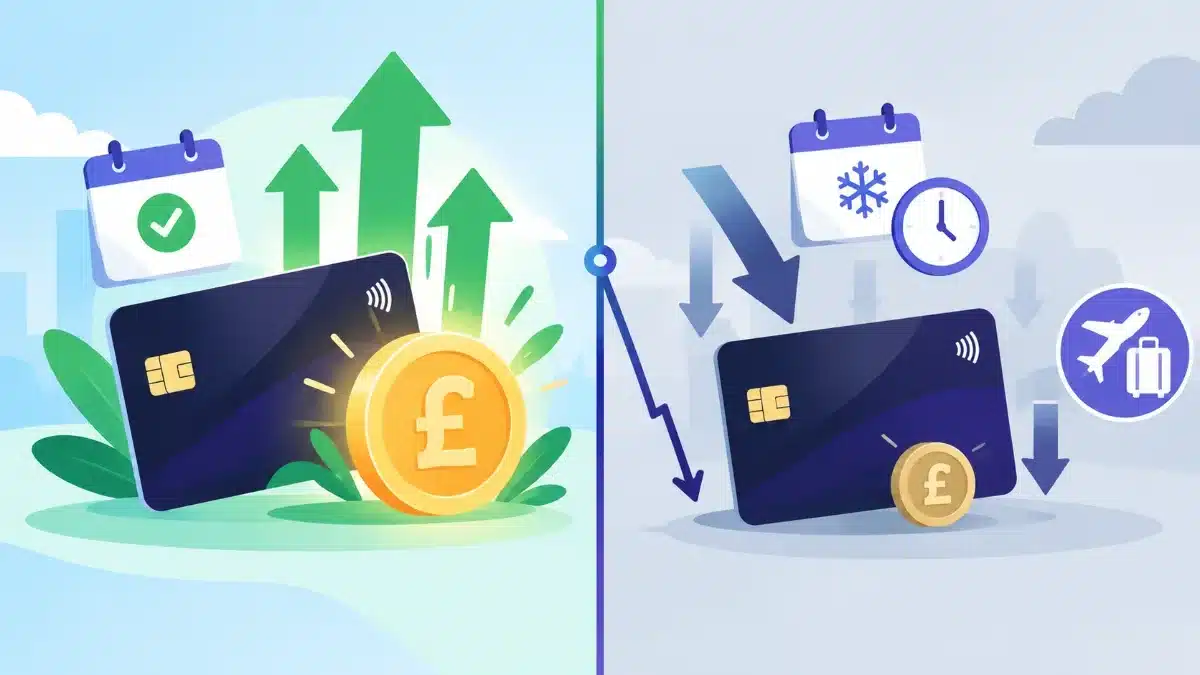
The first Lloyds Ultra cardholders are now hitting their first anniversary. That matters, because the card’s headline 1% cashback only lasts for the first year from account opening. After that it falls to 0.25%.
Lloyds launched the card in October 2025, so anyone who opened one in the first wave is losing the 1% rate this month. This guide works out what the drop costs in pounds, flags the cashback you have earned but not yet been paid, and sets out the options.
Table of Contents
Quick answer
- The rate change: 1% on purchases in the first year from account opening, then 0.25%. That is a 75% cut in what you earn.
- The cost: on £1,000 a month of spending, yearly cashback falls from £120 to £30.
- The catch: cashback is paid once a year, in January. Cashback earned since last January has not been paid to you yet.
- The upside that stays: no fee on foreign currency purchases and no Lloyds fee on cash withdrawals, at home or abroad.
Table of contents
- What changes after year one
- When exactly your 1% ends
- What the drop costs you in pounds
- The January catch: cashback you haven’t been paid yet
- Is the card still worth keeping at 0.25%?
- Can you close it and reapply for 1% again?
- How it compares with other cashback cards
- What to do now
- FAQ
What changes after year one
Only the cashback rate changes. Lloyds’ product page lists the rest of the card’s features as standard, not introductory.
| Feature | Year one | From year two |
|---|---|---|
| Cashback on purchases | 1% | 0.25% |
| Cashback cap | None stated | None stated |
| When cashback is paid | Every January | Every January |
| Fee on foreign currency purchases | None | None |
| Lloyds fee on cash withdrawals | None (interest from day one) | None (interest from day one) |
| Monthly account fee | None | None |
To keep earning cashback at either rate, you must make at least the minimum payment on time every month. Only purchases by you or an additional cardholder count.
When exactly your 1% ends
Lloyds’ wording is “the first year from account opening”. It is not tied to the calendar year or to the January payout.
So the switch happens on a different date for each cardholder. If you opened the card in mid-October 2025, your purchases from mid-October 2026 earn 0.25%. If you opened it in March 2026, you keep 1% until March 2027.
Your account opening date is on your first statement and in the Lloyds app. Lloyds doesn’t say on its product page whether it sends a reminder before the rate drops, so it is worth checking the date yourself.
What the drop costs you in pounds
Because there is no cap, the loss grows with your spending. Here is what a full year earns at each rate.
| Monthly card spend | Yearly spend | Cashback at 1% | Cashback at 0.25% | You lose |
|---|---|---|---|---|
| £500 | £6,000 | £60 | £15 | £45 |
| £1,000 | £12,000 | £120 | £30 | £90 |
| £2,000 | £24,000 | £240 | £60 | £180 |
These figures assume you clear the balance in full every month. If you carry a balance, interest wipes out cashback at either rate. The representative APR for new applicants is now 16.9% variable, up from 12.9% when Which? reported the launch in October 2025.
The January catch: cashback you haven’t been paid yet
This is the part most cardholders miss. Lloyds shows your cashback on each monthly statement, but it only pays it to your account once a year, in January.
Early cardholders on the MoneySavingExpert forum reported their first payout landing on 31 December 2025, as a credit that reduced their January statement balance. That means everything you have earned at 1% since then is still sitting on your statements, unpaid.
On £1,000 a month, that is roughly £95 of cashback built up between January and mid-October (about nine and a half months at £10 a month).
Lloyds’ product page doesn’t say what happens to unpaid cashback if you close the account before January. The card’s general terms don’t cover it either: they only mention cashback in passing, for the APR and minimum payment calculations. So if you plan to close the card, either:
- ask Lloyds in writing (secure message in the app) whether accrued cashback is paid on closure, or
- keep the card open until the January credit has landed, then decide.
The general terms also let Lloyds change or remove account features, with at least 60 days’ written notice for changes to your disadvantage. Keep an eye on letters and app messages if you’re counting on the January payout.
Is the card still worth keeping at 0.25%?
For many people the answer depends on travel, not cashback.
The Ultra charges no fee on foreign currency purchases and no Lloyds fee on cash withdrawals. Many cards add a fee of around 3% to each overseas purchase. On £1,500 of holiday spending, that’s £45 saved, which is more than a year of 0.25% cashback on £1,000 a month (£30).
Two things weaken the case for keeping it:
- Cash withdrawals still cost you. There’s no fee from Lloyds, but interest is charged from the day you withdraw, and the cash machine owner may add its own fee.
- Other no-fee travel cards exist. Barclaycard Rewards, for example, also advertises 0.25% cashback and no fees abroad, so the Ultra’s year-two package isn’t unique.
Keeping an unused card open has its own pros and cons for your credit file. We cover them in Should You Cancel Unused Credit Cards?
Can you close it and reapply for 1% again?
This is the most common question from cardholders, and there’s no clear published answer.
Lloyds’ only stated application bar is not having been declined for a Lloyds credit card in the last 30 days. It doesn’t publish a rule on former Ultra holders, and it doesn’t say whether a second Ultra account would get a fresh first year at 1%.
Points to weigh before trying it:
- A new application means a hard search on your credit file.
- Closing first means losing the credit limit, which can raise your credit utilisation on other cards.
- The January catch above applies: close too early and you may need to chase unpaid cashback.
- Lloyds’ eligibility checker shows whether you’re likely to be accepted, and it doesn’t affect your credit score.
Other issuers are explicit about repeat offers. American Express, for instance, excludes anyone who has held any personal Amex card in the past 24 months from its Platinum Cashback Everyday welcome bonus.
How it compares with other cashback cards
Here is the Ultra in year two against two widely available alternatives, using each issuer’s own published figures on 14 October 2026.
| Card | Cashback | Conditions | Fees abroad | Representative APR |
|---|---|---|---|---|
| Lloyds Ultra (year two onwards) | 0.25%, no cap stated | Minimum payment on time | No foreign currency fee | 16.9% variable |
| Barclaycard Rewards | 0.25% on new purchases | See Barclaycard terms | Advertised as no fees abroad | See summary box |
| Amex Platinum Cashback Everyday | 2% for 12 months (max £200), then 0.5% up to £10,000 and 1% above | £3,000 minimum yearly spend; no welcome bonus if you’ve held a personal Amex in 24 months | Not stated on product page | 29.1% variable |
On £1,000 a month, the Amex’s standard tiers would pay £70 a year (£50 on the first £10,000 and £20 on the remaining £2,000) against £30 on the Ultra. The trade-off is a much higher interest rate if you ever carry a balance, and Amex isn’t accepted everywhere.
Using two cards for different jobs is common: one for travel, one for the best cashback at home. Our guide to cashback stacking shows how that works, and the 8 need-to-knows about rewards credit cards covers the rules that catch people out.
What to do now
- Find your account opening date on your first statement or in the app. That’s the date your 1% ends.
- Add up your unpaid cashback. Each monthly statement shows what you’ve earned since the last January payout.
- Decide what the card is for. If it’s mainly your travel card, 0.25% may not matter much. If it was your everyday cashback card, compare the alternatives.
- Don’t close the card before January unless Lloyds has confirmed in writing that accrued cashback is paid on closure.
- Clear the balance in full each month. At 16.9% APR, interest on a carried balance quickly cancels out 0.25% cashback.
If you also bank with Halifax, note that the Halifax brand is being moved to Lloyds. Our Halifax-to-Lloyds guide explains what that means for your accounts and your FSCS protection.
Verdict
The Ultra was built to win customers with a strong first year, and that year is now ending for its earliest users. At 0.25%, it is a solid fee-free travel card rather than a cashback card.
The key is timing. Your cashback is paid each January, so the safest move for most cardholders is to wait for that credit before closing or switching. You can check the current terms on Lloyds’ Ultra page.
This guide is general information, not financial advice. Rates and terms change, so check the issuer’s current terms before applying for or closing a card.
FAQ
When does Lloyds Ultra cashback drop to 0.25%?
One year after your account was opened. The 1% rate applies to purchases in the first year from account opening, then 0.25% applies.
When is Lloyds Ultra cashback paid?
Once a year, in January. It builds up on your monthly statements and is then credited to your card account. Early cardholders reported the first payout on 31 December 2025.
Is there a cap on Lloyds Ultra cashback?
Lloyds doesn’t state a cap, and Which? reported at launch that there is no cap on how much you can earn.
Do I lose my cashback if I close my Lloyds Ultra card?
Lloyds doesn’t say on its product page or in the card’s general terms. Ask Lloyds in writing before closing, or wait until the January payout has been credited.
Can I get 1% cashback again by reapplying?
Lloyds doesn’t publish a rule either way. Its only stated bar is a declined Lloyds credit card application in the last 30 days. A new application means a hard credit search.
Does the Lloyds Ultra still have no fees abroad after the first year?
Yes. The no-fee foreign currency purchases and no Lloyds cash withdrawal fee aren’t introductory. Interest on cash withdrawals still applies from the day you withdraw.
Sources: Lloyds Bank, Lloyds Ultra Credit Card; Lloyds Ultra general terms and conditions; Which?, 2 October 2025; Barclaycard Rewards; American Express Platinum Cashback Everyday; MoneySavingExpert forum, January 2026.


Recent Comments