


Table of Contents
Standby Letter of Credit: How It Works and When to Use One
A standby letter of credit is a bank’s promise to pay a beneficiary if its own customer fails to meet an obligation. It sits behind the deal, not inside it. Most business owners hear the word “guarantee” and assume every instrument works the same way. It does not, and the difference can decide whether you get paid on time or spend months arguing with a bank over paperwork.
A standby letter of credit (SBLC or SLOC) works best as a payment of last resort for buyers, sellers, contractors, and lenders who need a bank-backed financial instrument that only activates on default, rather than a tool for routine payment processing. If you are exporting equipment to a buyer you have never worked with, backing a lease on a new facility, or bidding on a government contract that requires proof of financial strength, an SBLC gives the other side a bank’s credit standing instead of your own.
This matters because an SBLC is an independent undertaking. The issuing bank’s promise to pay stands apart from the underlying contract between the buyer and seller. That independence is what makes the instrument reliable, and it is also what trips up applicants and beneficiaries who assume a contract dispute will stop a valid draw.
Trade finance uses this tool constantly in international transactions, construction contracts, and supply agreements, precisely because it separates payment risk from performance risk in a way ordinary contracts cannot.
How the Bank-Backed Safety Net Works
A standby letter of credit works because the issuing bank makes its own separate promise to pay, one that exists apart from whatever deal the applicant and beneficiary signed. The bank is not judging who is right in a contract dispute. It is only checking whether the beneficiary’s payment demand matches the paperwork the SBLC requires.
The Independent Undertaking Behind the Deal
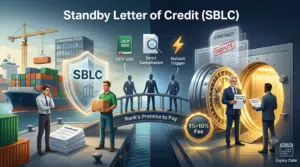
The SBLC is a standalone undertaking, not a copy of the sales contract or lease it supports. Global rule sets like UCP 600 and ISP98 define it this way on purpose.
This means the issuing bank cannot refuse payment just because the applicant claims the beneficiary breached the underlying contract elsewhere. The bank examines documents, not disputes.
Who Are the Applicant, Beneficiary, and Issuing Bank?
Three parties drive every SBLC. The applicant is the bank’s customer, the party requesting the SBLC to support its own contractual obligations. The beneficiary is the counterparty who receives protection and holds the right to draw on the instrument.
The issuing bank (or issuer) is the party making the actual payment promise. In the underlying deal, these same parties might be called buyer and seller, landlord and tenant, or lender and borrower. The SBLC uses its own vocabulary regardless of what the contract calls them.
What Happens When the Applicant Defaults?
When the applicant fails to meet its payment obligation or financial obligation, the beneficiary can present a demand for payment to the issuing bank. This triggers a drawing, sometimes called a claim.
The bank reviews the presentation, usually a draft plus a written statement of default, against the SBLC’s exact terms. If the documents comply, the bank pays. The applicant then owes the bank for that payout under a separate reimbursement agreement.
Why Most Standbys Expire Without a Drawing
Most SBLCs never get drawn. Applicants generally complete their contracts as agreed, so the beneficiary has no reason to make a demand.
When the expiry date (or expiration date) arrives with no drawing, the SBLC simply closes. Unless all parties agree to change it, it remains an irrevocable commitment throughout its life, meaning the issuer cannot cancel or amend it unilaterally before that date.
Which Type Fits the Obligation?
The obligation you need to protect determines which SBLC you request, and the two core types are not interchangeable. A financial SBLC backs a payment obligation; a performance SBLC backs a performance obligation. Picking the wrong one can leave a real risk uncovered.
Financial SBLCs for Payment and Credit Support
A financial SBLC guarantees a specific financial obligation, such as loan repayment or an unpaid invoice. Banks issue these to protect against buyer default or a borrower missing a payment.
This type also works as credit enhancement. If your company has thinner credit quality than your counterparty wants, a financial SBLC substitutes the issuing bank’s stronger credit standing for your own, which can make a hesitant supplier or lender comfortable enough to sign.
Performance SBLCs for Non-Financial Commitments
A performance SBLC covers non-financial commitments, most often a performance guarantee that a contractor will finish agreed work. It pays out only if the applicant fails to perform as promised, not if they simply miss a payment.
These are common on construction projects, where a project owner wants assurance a contractor will complete the work, or the owner can draw on the SBLC to help cover the cost of finishing it another way.
Common Uses in Supply Contracts, Leases, and Construction
Supply contracts often use financial SBLCs to protect sellers against buyer bankruptcy or nonpayment, especially in international trade where credit histories are hard to verify across borders. Landlords request SBLCs on commercial leases instead of larger cash security deposits.
Construction owners use performance SBLCs alongside or instead of surety bonds. In each case, the SBLC lets a business avoid tying up cash while still giving its counterparty solid financial protection.
How to Obtain and Issue an SBLC
Getting an SBLC issued works much like applying for a loan, because the bank is extending credit risk on your behalf. The issuing bank reviews your finances, decides what security it needs, and only then sends the instrument to the beneficiary or their bank.
What the Bank Reviews Before Approval
The bank starts with underwriting and due diligence on the applicant, much like a lending decision. It looks at your creditworthiness, existing debt, and cash flow to judge how likely you are to default on the underlying obligation.
Banks classify SBLCs as financial or performance exposure under BASEL and Dodd-Frank frameworks, which shapes how much capital they must hold against the commitment. That classification affects how carefully they underwrite the request.
Collateral, Creditworthiness, and Reimbursement Risk
Weaker credit quality usually means the bank asks for collateral or cash margin before issuing. The bank’s core concern is reimbursement risk: will it get repaid if it has to pay the beneficiary?
Businesses with strong liquidity and an established banking relationship often secure SBLCs with less collateral. Newer companies, or those with thinner balance sheets, may need to pledge cash or other assets to support the issuance.
Issuance, Advising, and Confirmation Across Borders
Once approved, the issuing bank sends the SBLC directly to the beneficiary or routes it through an advising bank in the beneficiary’s country. The advising bank simply passes the instrument along; it has no payment obligation of its own.
For added assurance in international transactions, a beneficiary can ask a bank in their own country to confirm the SBLC. A confirming bank then adds its own independent promise to pay, on top of the issuer’s, which matters if the beneficiary is unfamiliar with the issuing bank’s home jurisdiction.
What Do SBLC Issuance Fees Cost?
Issuance fees typically run 1% to 10% of the guaranteed amount per year, based on the applicant’s credit quality and the size of the commitment. Stronger credit generally lands at the lower end of that range.
Expect additional bank charges and bank fees for amendments, confirmation, or extended tenors. A financial institution will quote these costs before issuance, so ask for the full fee schedule up front. You can review how this process works in practice through resources like the sblc guide from Financely Group.
How Does a Beneficiary Make a Valid Draw?
A beneficiary gets paid by submitting a documentary presentation that matches the SBLC’s terms exactly, not by proving the applicant actually defaulted. This document-driven process is what separates an SBLC from an ordinary guarantee.
Documentary Presentation and Strict Compliance
The bank pays against documents, under a rule called strict compliance. If the SBLC calls for a demand letter and a signed default statement, the beneficiary must supply precisely that, in the format specified.
A misspelled company name, a missing signature, or a late presentation can lead to rejection, even when the underlying default is real and undisputed. This is the single most common reason valid claims get delayed or denied.
Demand Language, Required Documents, and Timing
Most standbys require a draft and a written demand for payment stating the default, sometimes with a specific format for the default statement. Presentation must happen before the expiry date; a beneficiary who waits too long loses drawing rights entirely.
Review the SBLC’s document list against your capacity to produce it under pressure. If the required documents depend on cooperation from another party, that dependency deserves attention before signing the contract, not after a default occurs.
Why the Underlying Dispute Usually Does Not Stop Payment
The issuing bank’s obligation stands apart from the underlying contract, so a contract dispute rarely blocks a compliant draw. This is the independence principle in practice, and it is central to why SBLCs work as reliable credit enhancement.
Courts generally enforce this separation except in narrow fraud cases, where a beneficiary knowingly presents a false demand. Outside of fraud, non-payment because the applicant disputes the underlying facts is not a valid basis for the bank to refuse a complying presentation. That reliability is the entire point of using this instrument instead of relying on the underlying contract alone.
How SBLCs Compare With Other Trade Instruments
An SBLC differs from a commercial letter of credit in purpose and differs from a bank guarantee in governing rules, even though all three get called “guarantees” in casual conversation. Knowing which rulebook applies changes how a dispute over payment risk or compliance risk gets resolved.
| Feature | SBLC | Commercial LC | Bank Guarantee |
|---|---|---|---|
| Normal use | Backup if applicant defaults | Primary payment for a sale | Backup if applicant defaults |
| Pays when | Beneficiary proves default | Seller presents shipping documents | Beneficiary demands payment |
| Governing rules | UCP 600 or ISP98 | UCP 600 | URDG 758 (or local law) |
| Common markets | US, cross-border trade | International trade | Europe, Middle East, government contracts |
SBLC vs. Commercial Letter of Credit
A commercial letter of credit (commercial LC) is a primary payment method; the bank expects to pay it as part of a normal sale. An SBLC only pays if something goes wrong, making it a backup rather than a transaction mechanism.
Both instruments started from the same legal family, and US banks historically built SBLCs by adapting commercial LC mechanics, since US banking law made it easier to issue letters of credit than open-ended guarantees.
SBLC vs. Bank Guarantee and Demand Guarantee
A bank guarantee and a demand guarantee cover a similar function to an SBLC: paying a beneficiary when the applicant fails to perform. The practical difference is governing law. Demand guarantees usually operate under URDG 758 (icc rules built specifically for guarantees), while SBLCs run under UCP 600 or ISP98 (international standby practices).
Bank guarantees are more common outside the US, particularly in Europe and government contracting, while US banks favor the SBLC structure because of how domestic banking law developed.
Which ICC Rules and Governing Law Apply?
Check which rulebook and jurisdiction (governing law) the SBLC names before signing anything. UCP 600, ISP98, and URDG 758 handle document examination and payment timing differently, and the negotiation over which rule set applies often happens at the term sheet stage, not after a dispute arises.
Using an SBLC as Reliable Contingent Protection
A standby letter of credit gives a beneficiary a bank’s independent promise to pay if the applicant fails on a payment obligation or performance obligation, backed by the issuing bank’s own credit rather than the applicant’s. That independence, paired with document-driven draws, is what makes it dependable when contract disputes get messy.
Getting real value from an SBLC means matching the type to the risk, financial SBLC for payment exposure, performance SBLC for non-financial commitments, and reading the required documents closely enough to know you can produce them under pressure. Applicants gain credit enhancement and can avoid tying up cash; beneficiaries gain protection against contractual obligations going unmet.
The instrument rewards careful drafting and punishes careless paperwork in equal measure. Get the documents, governing rules, and jurisdiction right at issuance, and the SBLC does exactly what it is meant to do: sit quietly in the background until you need it.


Recent Comments