

Table of Contents
Federal Reserve Terminates Enforcement Actions with Crédit Agricole, Mega Bank, and Goldman Sachs After Years of Oversight
The Federal Reserve Board announced on April 9, 2026, the termination of enforcement actions against three major global financial institutions – Crédit Agricole S.A., Mega International Commercial Bank Co., Ltd, and The Goldman Sachs Group, Inc. – marking the conclusion of regulatory oversight periods that spanned nearly a decade for some of the banks. The Federal Reserve termination of enforcement actions represents a significant regulatory milestone for the affected institutions, signaling their successful remediation of compliance deficiencies identified in cease and desist orders originally issued between 2015 and 2018. This development comes amid broader shifts in the regulatory landscape and reflects the culmination of extensive compliance improvement efforts by the banks under Federal Reserve supervision.
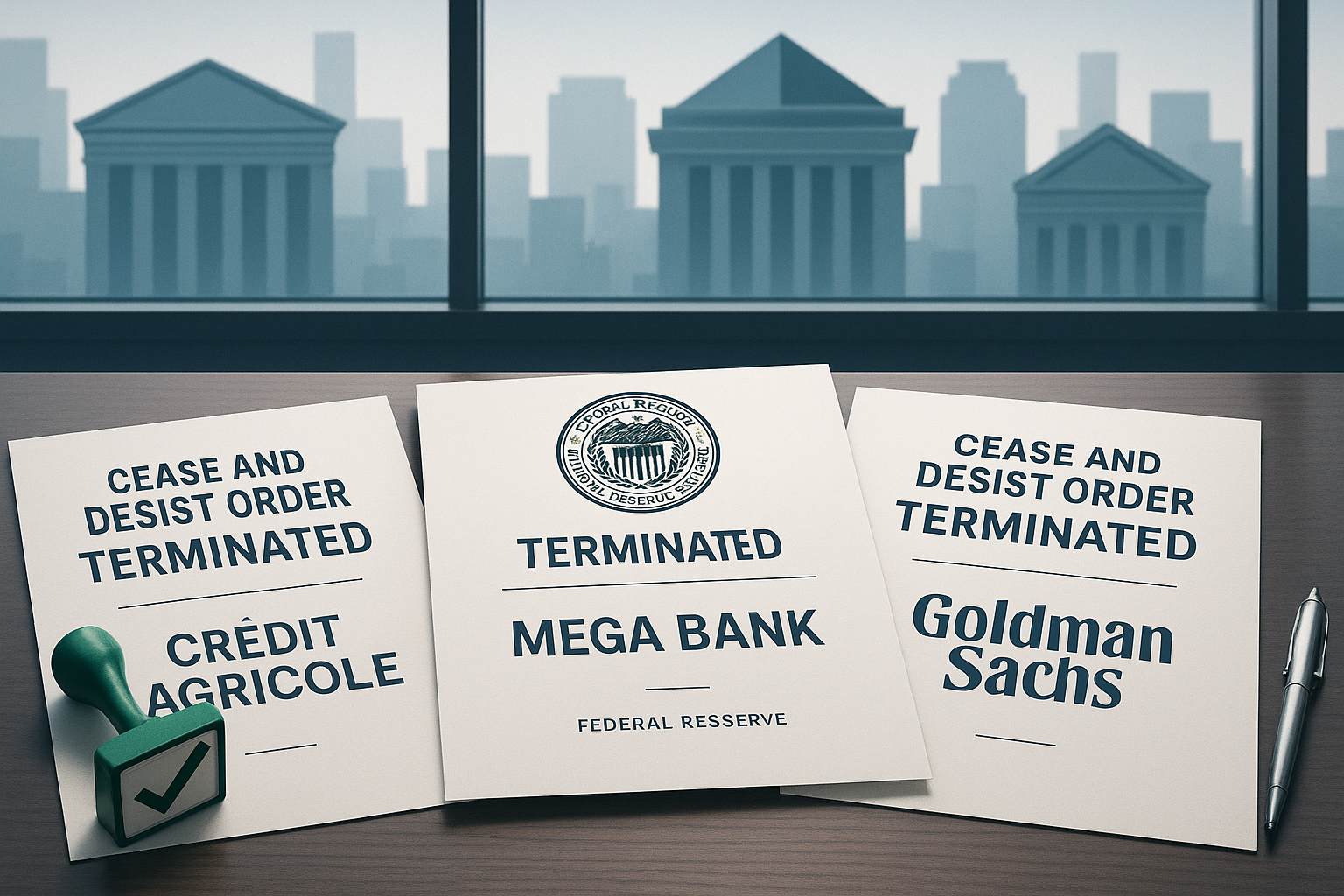
The terminated enforcement actions included a 2015 cease and desist order against Crédit Agricole S.A. and Crédit Agricole Corporate and Investment Bank related to anti-money laundering compliance deficiencies, a 2018 order against Mega International Commercial Bank Co., Ltd and its U.S. branches concerning similar compliance issues, and a 2018 order against The Goldman Sachs Group, Inc. The Federal Reserve confirmed that all three enforcement actions were formally terminated on March 25, 2026, with the public announcement following standard procedural timelines. The resolution of these long-standing regulatory matters provides the banks with greater operational flexibility while demonstrating the effectiveness of the Federal Reserve’s supervisory framework in addressing compliance deficiencies over extended periods.
Details of Terminated Federal Reserve Enforcement Actions
- Crédit Agricole Enforcement Action: The Federal Reserve terminated a cease and desist order dated October 19, 2015, against Crédit Agricole S.A. and Crédit Agricole Corporate and Investment Bank related to anti-money laundering compliance deficiencies.
- Mega International Commercial Bank Enforcement Action: The Federal Reserve terminated a cease and desist order dated January 17, 2018, against Mega International Commercial Bank Co., Ltd and its U.S. branches in New York, Chicago, and Silicon Valley concerning compliance issues.
- Goldman Sachs Enforcement Action: The Federal Reserve terminated a cease and desist order dated May 1, 2018, against The Goldman Sachs Group, Inc., resolving regulatory matters that have been under oversight for approximately eight years.
- Termination Date: All three enforcement actions were formally terminated on March 25, 2026, with the Federal Reserve making the public announcement on April 9, 2026.
- Regulatory Significance: The terminations indicate successful remediation of identified compliance deficiencies and satisfaction of Federal Reserve supervisory requirements.
The Federal Reserve’s announcement stated, “The Federal Reserve Board on Thursday announced the termination of the enforcement actions listed below,” providing minimal additional commentary beyond confirming the regulatory actions. This approach is consistent with the Federal Reserve’s standard communication practices regarding enforcement terminations, which typically focus on factual reporting rather than interpretive analysis. The terminations represent the conclusion of regulatory oversight periods that required significant compliance investments by the affected institutions, including enhanced anti-money laundering controls, improved risk management frameworks, and strengthened governance structures.
The resolution of these enforcement actions comes at a time of evolving regulatory priorities and supervisory approaches within the U.S. financial regulatory framework. While the Federal Reserve continues to maintain rigorous oversight of financial institutions, the termination of long-standing enforcement actions suggests a recognition of successful remediation efforts and a willingness to conclude supervisory matters when compliance deficiencies have been adequately addressed. This balanced approach supports both regulatory objectives and institutional stability, allowing banks to move forward from historical compliance issues while maintaining appropriate safeguards against future deficiencies.
Broader Implications for Financial Regulation and Institutional Compliance
The Federal Reserve’s termination of enforcement actions against Crédit Agricole, Mega International Commercial Bank, and Goldman Sachs carries significant implications for the broader financial regulatory landscape. The resolution of these matters demonstrates the potential for institutions to successfully navigate extended regulatory oversight periods and ultimately satisfy supervisory requirements through sustained compliance improvements. This outcome provides a valuable precedent for other financial institutions facing similar regulatory challenges, highlighting the importance of comprehensive remediation programs and constructive engagement with regulatory authorities.
The timing of these enforcement terminations is particularly noteworthy given ongoing debates about regulatory burden and the appropriate balance between supervisory rigor and operational flexibility. As financial institutions continue to navigate complex compliance requirements across multiple jurisdictions, the successful resolution of long-standing enforcement matters offers encouragement that sustained compliance investments can yield positive regulatory outcomes. The Federal Reserve’s approach also reflects a pragmatic recognition of institutional progress, allowing banks to transition from remediation phases to normal supervisory relationships when appropriate standards have been met.
Looking forward, the termination of these enforcement actions may influence regulatory approaches to similar compliance matters across the financial sector. The Federal Reserve’s willingness to formally conclude oversight periods after successful remediation could encourage more proactive compliance investments by institutions seeking to resolve regulatory concerns efficiently. This development also underscores the importance of robust compliance frameworks in managing regulatory relationships, particularly for global financial institutions operating across multiple jurisdictions with varying supervisory expectations.



Recent Comments